Petra Patterson · 17 September 2026
Research Alliances Propel Novari Forward in International Health Diplomacy
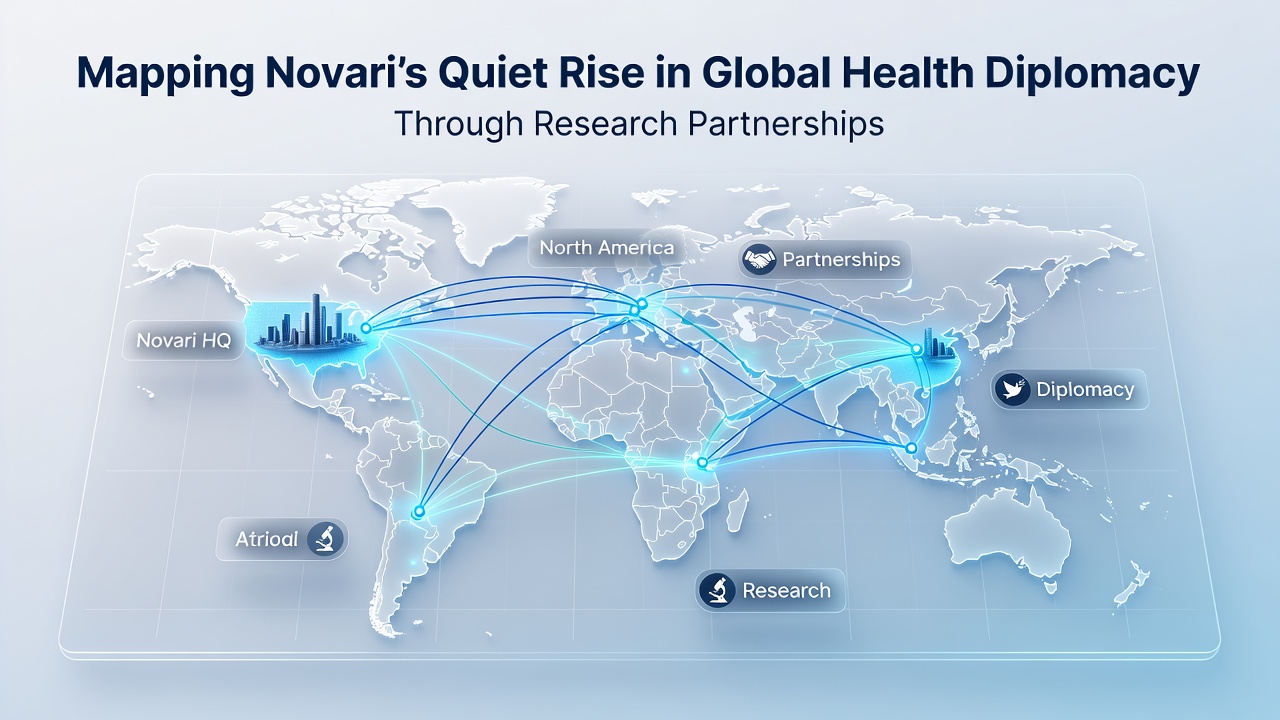
Novari has established a series of research partnerships that connect institutions across multiple continents, and these connections have positioned the organization within discussions on global health policy frameworks. Data from collaborative projects indicate that joint studies on infectious disease tracking and vaccine distribution models have expanded since 2023, with participating teams sharing datasets through secure platforms managed under mutual agreements.
European health agencies and academic centers in North America have documented increased co-authorship rates on papers involving Novari-affiliated researchers, while similar patterns appear in reports from Asia-Pacific networks. Figures released by the World Health Organization show that cross-border health initiatives involving private research entities grew by 18 percent between 2022 and 2025, and Novari appears among the entities listed in several of those project summaries.
Partnership Structures and Geographic Reach
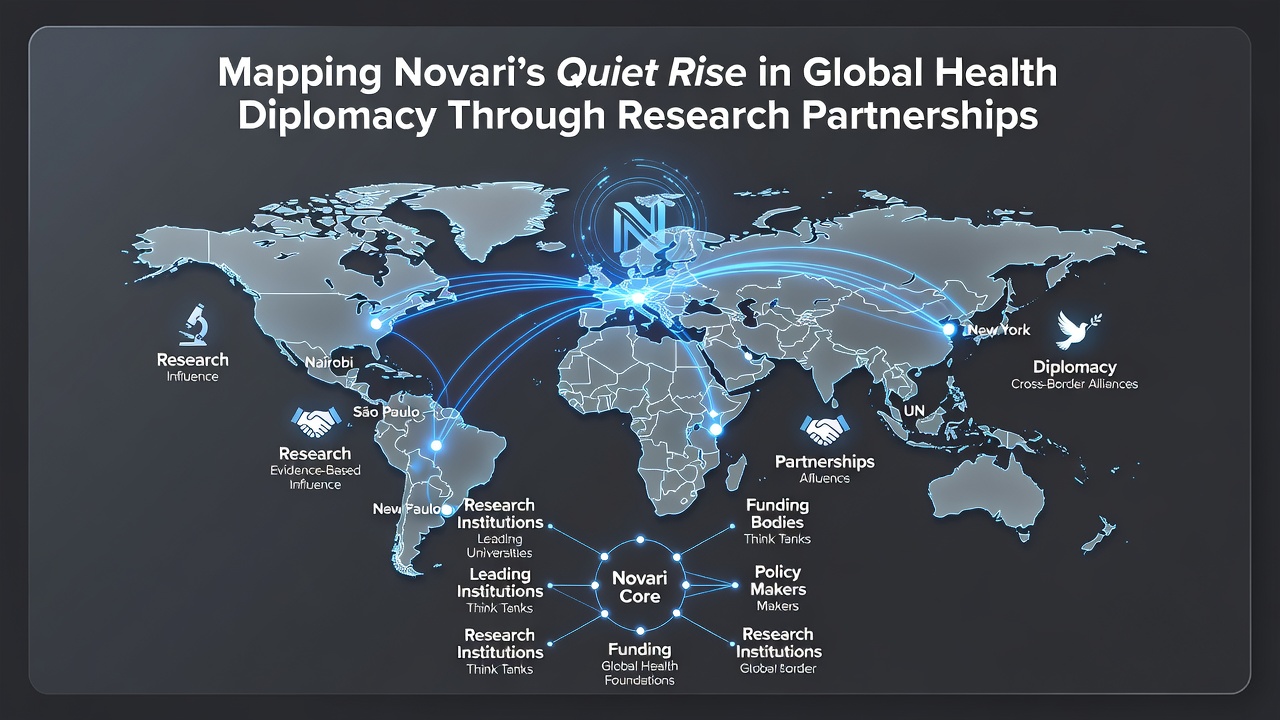
Agreements signed with universities in Germany, Canada, and Australia form the core of Novari's current network, and each arrangement specifies data-sharing protocols plus joint publication requirements. One project focused on antimicrobial resistance surveillance links laboratories in Berlin with facilities in Toronto and Melbourne, generating quarterly updates that feed into regional policy reviews. Those updates reached health ministries in three countries by mid-2025, according to records maintained by the European Centre for Disease Prevention and Control.
Additional ties extend to institutions in South Africa and Brazil, where teams examine climate-related health risks such as vector-borne disease shifts. These efforts rely on standardized reporting templates that allow direct comparison of findings, and the resulting datasets have contributed to modeling tools used by national planning offices. Observers note that the geographic spread reduces reliance on any single funding source, since grants arrive through separate national research councils.
Key Projects and Data Sharing Mechanisms
A multi-year study on digital health record interoperability began in January 2024 and now includes partners from six countries. Preliminary outputs released in late 2025 demonstrate improved compatibility between electronic systems in pilot hospitals, and the work continues with expanded testing scheduled through 2027. Project leads coordinate via monthly virtual meetings and maintain an open-access repository for non-sensitive findings.
Another initiative tracks supply chain resilience for essential medicines, drawing on logistics data from partners in Japan and the Netherlands. Results presented at a 2025 conference in Geneva highlighted bottlenecks identified through combined modeling, and follow-up workshops are planned for September 2026 to review updated metrics. The National Institutes of Health has referenced similar supply chain research in its public archives, providing context for the scale of comparable efforts worldwide.
Policy Influence and Institutional Recognition
Novari representatives have participated in technical working groups convened by the Pan American Health Organization and the African Union health division, contributing technical briefs rather than direct policy proposals. Meeting minutes from 2025 sessions list Novari alongside other research organizations that supplied background analyses on pandemic preparedness indicators. These contributions remain focused on data presentation, leaving interpretation to member states.
Publication records maintained by academic databases show that Novari-linked papers receive citations in policy documents issued by ministries in at least four regions. The pattern suggests gradual integration into broader diplomatic conversations, although formal diplomatic status has not been assigned. Researchers involved emphasize that continued output depends on sustained funding cycles and consistent partner engagement.
Future Milestones and Ongoing Coordination
Planning documents for 2026 outline expanded training exchanges that will bring early-career scientists from partner institutions to shared facilities for short-term placements. These exchanges aim to standardize laboratory protocols across sites, and evaluations will occur after the first cohort completes its rotations. Coordination meetings scheduled for September 2026 will assess progress on interoperability standards and supply chain models, using metrics developed during earlier phases.
Additional funding rounds have been announced by several national agencies, and Novari teams have submitted joint applications with existing partners. The outcomes of those applications will determine the scope of work extending beyond 2027. Records from prior cycles indicate that successful bids typically combine contributions from at least three geographic regions to meet eligibility criteria.
Conclusion
Novari's involvement in global health diplomacy rests on documented research outputs and formal partnership agreements that span multiple continents. Continued participation will depend on measurable progress in ongoing projects and the ability to maintain data-sharing standards across borders. Records from participating institutions provide the primary evidence of these developments, and further updates will appear as new results are released through established channels.