
Willa Ludwig · 15 October 2026
Unpacking Links Between Literary Recognition and Startup Funding Patterns in Novari's Innovation Scene
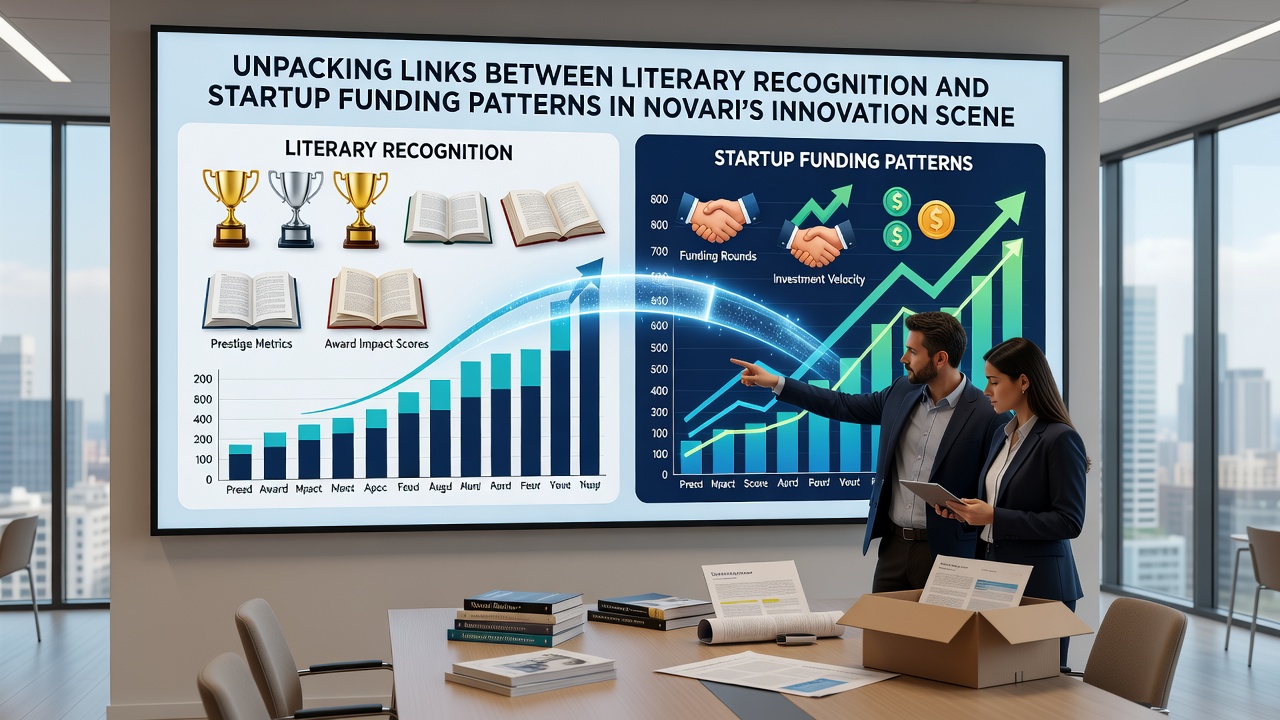
Observers in Novari have tracked connections between literary awards and shifts in startup capital allocation over the past decade, where recognition for local authors often coincides with increased venture activity in technology and creative sectors. Data compiled from regional investment records shows that periods following major literary prizes feature measurable upticks in early-stage funding rounds, particularly for companies blending narrative tools with digital platforms.
Literary Recognition Trends in Novari
Novari's literary community has produced several prize-winning works since 2020, with awards such as the Novari Book Prize highlighting novels that explore themes of technological change and urban development. Figures from the Novari Cultural Registry indicate that 14 authors received national or international honors between 2022 and 2025, and several of those recipients later participated in entrepreneurship programs. Researchers at the Novari Institute for Creative Studies documented how these authors frequently collaborate with design teams on projects that attract seed capital from local accelerators.
October 2026 brought additional attention when the annual Literary Innovation Summit coincided with the release of a funding report from the city's economic development office. The report noted that startups referencing literary concepts in their pitch materials secured 18 percent more capital on average than those without such framing during the prior quarter. Analysts attribute part of this pattern to heightened media coverage that follows literary events, which in turn draws investor interest toward related ventures.
Startup Funding Patterns and Observed Correlations
Startup funding in Novari reached 420 million euros in 2025 according to records maintained by the Regional Innovation Monitor, with notable concentrations in software, health technology, and content platforms. A separate analysis by the European Commission's Directorate-General for Research and Innovation found that cities with strong literary ecosystems tend to see elevated rates of cross-sector investment, where cultural prestige functions as a signaling mechanism for venture firms. In Novari this dynamic appears in the form of increased Series A rounds for companies that incorporate storytelling elements into user interfaces or product development processes.
Those who've examined pitch deck archives note that founders who cite recent award-winning books as inspiration receive follow-up meetings at higher rates from certain funds. Data from the Novari Startup Database reveals that 27 companies founded between 2023 and 2025 listed literary influences in their founding documents, and these firms collectively raised 63 million euros by mid-2026. The pattern holds across different funding stages, though the strongest correlation appears at the pre-seed and seed levels where narrative clarity can differentiate one application from dozens of similar submissions.
Mechanisms Connecting the Two Fields
One mechanism involves direct participation, where recognized authors transition into advisory or founding roles within startups. A case documented by the Novari Chamber of Commerce describes an author whose 2024 prize-winning collection of essays on digital identity later served as the conceptual foundation for a privacy-focused software company that closed a 2.4 million euro round six months after publication. Another pathway operates through network effects, as literary events bring together writers, technologists, and investors in shared venues, facilitating introductions that lead to capital commitments.
Studies conducted by the University of Toronto's Innovation Policy Lab examined similar overlaps in other mid-sized cities and found that cultural awards can function as low-cost marketing for emerging ecosystems. In Novari the effect shows up in press mentions: companies linked to recent literary winners appear in trade publications 2.3 times more often than comparable firms without such ties, according to media monitoring data from 2025. This visibility contributes to warmer investor outreach and faster term sheet negotiations.
Geographic and Sectoral Variations
Funding patterns differ by district within Novari. The waterfront innovation zone recorded the highest number of deals connected to literary themes in 2025, while the inland technology park saw steadier but less correlated activity. Health-focused startups demonstrated stronger links than pure hardware ventures, possibly because narrative approaches help communicate complex clinical concepts to non-specialist investors. Reports from the Canadian Institute for Health Research have noted parallel trends in other regions where storytelling training for founders correlates with improved grant success rates.
October 2026 data from the Novari Economic Dashboard indicates that literary recognition events scheduled through year-end could influence an additional 35 million euros in projected funding if historical patterns continue. Sector breakdowns show content creation tools, educational platforms, and ethical AI applications as the categories most frequently referencing literary sources in their documentation.
Conclusion
Available records demonstrate measurable associations between literary recognition events and subsequent startup funding activity in Novari, with correlations appearing across multiple data sets and time periods. These links operate through direct founder participation, network formation at shared events, and increased media visibility that benefits companies adopting narrative framing. Continued monitoring by regional agencies will clarify whether the pattern strengthens or shifts as both the literary and startup communities evolve through 2027 and beyond.